


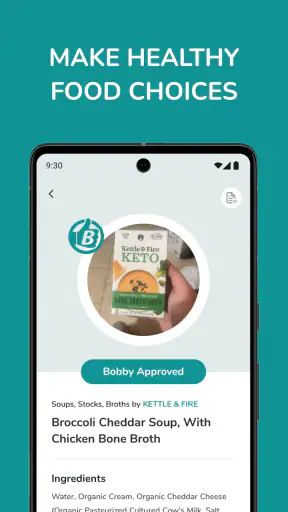
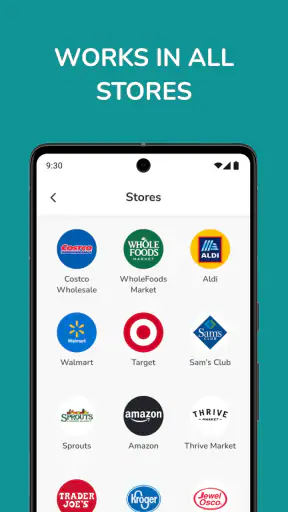
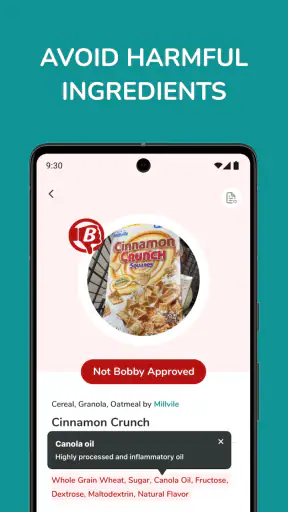
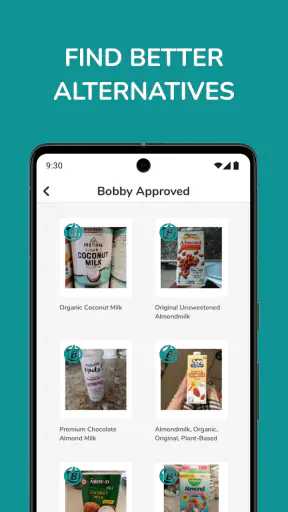
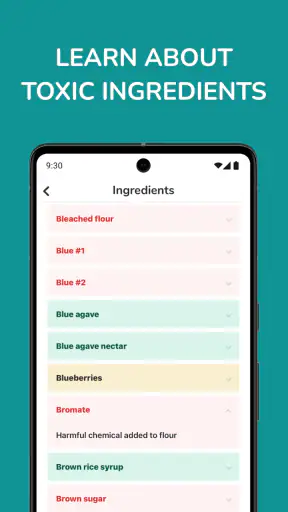
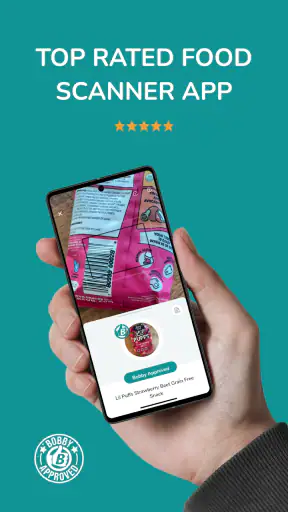
I usually approach food-label apps with some skepticism. They can feel useful for a few shopping trips, then become another icon I forget about. Bobby Approved made a better first impression because it gives me a quick way to check packaged products instead of asking me to study every ingredient panel from scratch. Its purpose is simple: I can scan, search, or browse products and see whether they meet the app’s “Bobby Approved” standard.
That narrow focus is also the reason it is easy to understand. This is a free Food & Drink app from BA GLOBAL HOLDINGS, LLC, aimed at everyday grocery decisions rather than meal planning, calorie tracking, or recipe management. I would recommend it most to someone who wants a fast second opinion while shopping, especially when a familiar-looking product has a long or confusing ingredient list.
From a promising first week to a useful shopping habit
During the first few shopping trips, the appeal is obvious. I can use the camera-based scanning workflow when I have the product in my hand, search when scanning is inconvenient, or browse when I am exploring options before going to the store. Having those three routes matters more than it may seem. A scanner is convenient in an aisle, while search is more practical when I am making a list at home and browsing helps when I do not yet know which brand or product I want.
The result is less about discovering a single “perfect” food and more about reducing hesitation. If I am comparing two jars, cereals, snacks, or other packaged goods, I can use the app as a quick filter before spending time reading every line on both labels. I still want to look at the packaging myself, but the app gives me a starting point that is easier to act on than vague health claims printed on the front.
One useful habit is to scan before placing an item in the cart, not after getting home. That small change prevents the app from becoming a post-shopping curiosity. If a product does not receive the result I expected, I can decide immediately whether to keep it, compare it with another option, or put it back. This makes the tool feel connected to a real decision rather than a collection of interesting checks.
The early experience is especially helpful for people who are trying to simplify their choices. I do not need to memorize every ingredient that concerns me or create a personal spreadsheet of products. The app supplies a consistent reference point, which can make a busy grocery trip less mentally tiring. It is also approachable for someone who is not comfortable interpreting unfamiliar food terminology.
Still, I would not treat the first result as a complete nutritional judgment. “Approved” is a useful signal, but it is not the same thing as a full diet recommendation. A product can fit the app’s criteria and still not suit my personal goals, allergies, portion preferences, or budget. I found the best use was to let the app narrow the field, then apply my own common sense to the final choice.
The app has also built a substantial audience: it has passed one million installs and holds a 4.8 average from around 19 thousand ratings. Those figures suggest that the quick-check idea resonates with many shoppers, but they do not remove the need to understand how the app fits my own routine. A high rating cannot tell me whether its standard matches the way I shop.
What makes the first-week workflow practical
My preferred workflow is to use browsing at home, searching when I know the exact product, and scanning only when I am standing in front of the shelf. That avoids forcing one method to do every job. It also makes the app feel faster because I am not repeatedly opening the camera for products I could have found through a simple search.
Another practical tip is to use it for repeat purchases rather than only novelty items. The first scan of a new product is satisfying, but the lasting benefit comes from checking the foods that regularly return to my basket. If a household buys the same breakfast item or snack every week, confirming that choice once can make later shopping more confident. I would still recheck when the packaging or formulation changes, because a previous result should not become an excuse to stop looking at labels altogether.
The app is also more useful when I treat it as a comparison tool. Instead of asking whether one product is universally good, I ask which of the available options better fits the app’s standard. That shift produces more realistic decisions. Grocery shopping rarely offers an ideal choice in every category, and a clear comparison is often more valuable than a dramatic pass-or-fail reaction.
How the value holds up after the novelty fades
The novelty of scanning products naturally wears off. After the first week, I no longer wanted to inspect everything simply because I could. The app earned its place more convincingly when I used it at decision points: unfamiliar brands, products with bold health language, foods bought for children, and items I was considering replacing in my regular routine.
That is where the month-to-month value becomes clearer. Food shopping repeats itself, and repeated uncertainty is a real source of friction. A tool that helps me make the same kind of decision more quickly can remain useful even when it is no longer exciting. I do not need to open it for every apple or every basic ingredient; its value is concentrated in packaged products where the front label tells only part of the story.
I also like that the app does not ask me to turn grocery shopping into a research project. Search and browsing make it possible to investigate products before I leave home, which is helpful when I am planning a change to my usual list. For example, if I want a different snack or pantry staple, I can explore candidates first and then look for them in a store. That is more efficient than wandering through an aisle and scanning randomly.
There is a trade-off, though. A product database can never replace the physical label in my hand. Packaging changes, regional availability differs, and a product I find in one shop may not be the exact version represented in the app. I would use the result as a guide, then verify the package, especially when ingredients are important for medical or allergy reasons. The app is a convenience layer, not a substitute for professional dietary advice or careful label reading.
Its strongest recurring use case is for households with shared shopping responsibilities. If one person usually researches food and another does the shopping, a quick app-based check can give both people a common reference. That can reduce messages back and forth about which version to buy. It is not a full household food-management system, but it can make a narrow part of the routine more consistent.
It can also help someone who is gradually changing eating habits rather than attempting a complete overhaul. I would not use it to judge every item in the kitchen on the first day. I would start with one category, learn which products fit the standard, and build a short list of dependable choices. That approach turns the app into a memory aid and reduces the temptation to make every shopping trip feel like a test.
Where it beats ordinary label reading
Compared with relying only on the front of a package, the app offers a more deliberate checkpoint. Front-of-pack language is designed to attract attention, while a scan or search encourages me to pause before assuming that an appealing claim tells the whole story. Compared with manually researching every ingredient, the app is faster and less demanding for ordinary shopping decisions.
It is less suitable than a dedicated nutrition tracker when my main goal is recording calories, macronutrients, meals, or daily intake. It is also not the better choice for recipe organization or grocery-list management. I would choose a different type of app if I wanted a complete food diary. Bobby Approved is more focused: it helps me evaluate products, rather than manage everything I eat.
That focus is a strength for beginners but a limitation for advanced users. Someone who already has a detailed personal framework for nutrition may find the app’s single standard too broad. I may disagree with a result because my priorities are different, or because I care about a factor the app is not designed to summarize. In that situation, the app remains a reference, but it should not outrank my own requirements.
The maintenance burden: small, but real
Maintaining a useful relationship with this app takes less effort than maintaining a full food journal, but it is not completely automatic. The main responsibility is remembering when to use it. If I only open it during the first few enthusiastic days, it becomes a novelty. If I use it selectively for new or questionable purchases, it becomes part of my shopping rhythm without slowing down every trip.
I would also keep the actual package in view. A scan can be quick, but the final decision still deserves a glance at the ingredient panel and any information that matters to me personally. This is particularly important when buying a product for someone else, since another person’s dietary needs may not match the assumptions I make for myself.
Another maintenance task is keeping expectations realistic. I should not interpret an approved result as permission to eat unlimited amounts, nor should I assume that every non-approved result makes a product unusable for every person. The app’s label is a decision aid. My diet, medical guidance, taste, household needs, and spending limit still matter.
The app is free, which removes one common barrier to keeping it installed. Its age rating is Everyone, so it is presented as a broadly accessible shopping tool rather than something limited to adults. It runs on Android versions starting with 7.0, and the current version is 1.3.3. For a person with a compatible Android device, there is little financial risk in trying it; the bigger question is whether the checking habit is valuable enough to continue.
Because the developer is BA GLOBAL HOLDINGS, LLC, I would still approach the app as a specific interpretation of product quality, not as an independent authority over food. That is not a criticism of the basic concept. It is simply the right way to use any branded approval system: understand that its usefulness depends on whether its criteria align with my priorities.
Small frictions that affect long-term use
The biggest friction is the possibility of interruption. In a crowded aisle, I may not want to stop, unlock my phone, position a package, and wait for a result when I am already comparing several items. Search and browsing help, but they do not eliminate the extra step. For quick weekly shops, I would reserve the app for products where the decision is genuinely unclear.
There is also a psychological drawback to binary-style guidance. A simple approval label feels decisive, but food choices are rarely that simple. I can become overly focused on passing the app’s test and forget that taste, affordability, convenience, and the rest of my diet also shape a sensible choice. Using the app as a filter rather than a judge keeps that problem under control.
Another limitation is that the tool is most valuable when I am buying packaged products. If my shopping is mostly fresh ingredients, products I already know well, or meals prepared from scratch, I may not open it often enough to justify a permanent place on my home screen. In that case, a recipe app, meal planner, or simple list may provide more recurring value.
What causes fatigue, and how I avoid it
Repeatedly scanning products can become tiring when there is no clear decision attached to the result. I noticed that the habit works better when I define a purpose before opening the app: finding a replacement, checking a new brand, or narrowing two similar choices. Without that purpose, browsing can turn into endless product checking that adds time without improving the meal plan.
Fatigue can also come from trying to apply one standard to the entire household. Different people may have different preferences and constraints, and a single approval result cannot settle every disagreement. I would use the app to start a conversation, not end one. That is especially important when a child, an older family member, or someone with a medical dietary requirement is involved.
My most effective long-term tactic is to create a mental shortlist from repeated use. After checking a category several times, I can remember a few dependable choices and stop scanning them every visit. The app then returns to its more valuable role: helping me investigate replacements when a product is unavailable, when I want variety, or when I am reconsidering what I usually buy.
I would also avoid using it while rushing through a small top-up shop. The benefit is greatest when the purchase has enough uncertainty to justify a pause. For a planned grocery trip, the browsing and search options make more sense. For an unplanned purchase, scanning can be worthwhile if the product is central to my routine. This selective approach keeps the app from becoming another obligation.
The public response is encouraging, with roughly 2.6 thousand written reviews alongside its large rating base. I read that as evidence that the concept is easy for people to understand and use, not as proof that every shopper will agree with every recommendation. The app’s lasting value still depends on whether its standard helps me make decisions I actually face.
My long-term verdict on keeping it installed
After the initial excitement fades, I think Bobby Approved earns lasting space for a specific kind of user: someone who regularly buys packaged food and wants a quick, repeatable way to screen unfamiliar or heavily marketed products. It is especially appealing if I want less label-reading friction without committing to a detailed nutrition-tracking routine.
I would not keep it as my only food tool. It does not replace personal dietary knowledge, a doctor’s advice, a nutrition diary, or a grocery planner. I would also skip it if most of my shopping involves fresh ingredients or if I already have a trusted system that answers the same questions more precisely. The app’s narrow purpose is helpful only when that purpose matches my recurring needs.
For me, the best long-term pattern is occasional but intentional use: browse before trying a new category, search when planning a replacement, scan when standing at the shelf, and confirm important details on the physical package. That workflow captures the convenience without turning every purchase into a ceremony.
The lasting value is not the scan itself; it is the calmer decision that follows it. When I use the app as a practical shortcut rather than a final authority, it helps me shop with more confidence and less guesswork. Free access makes experimenting easy, and the Everyone rating keeps it approachable, but the real test is simple: after the novelty disappears, does it save me enough uncertainty to open it again? For shoppers who frequently face confusing packaged-food choices, my answer is yes.
In short, I see it as a focused companion for grocery decisions, not an all-purpose health platform. Its strengths are speed, a clear purpose, and several ways to look up products. Its limitations come from the same simplicity: one approval framework cannot capture every personal need, and repeated checking can become tiring if I use it indiscriminately. Used selectively, it has a reasonable chance of becoming a steady shopping habit rather than a forgotten first-week experiment.


